


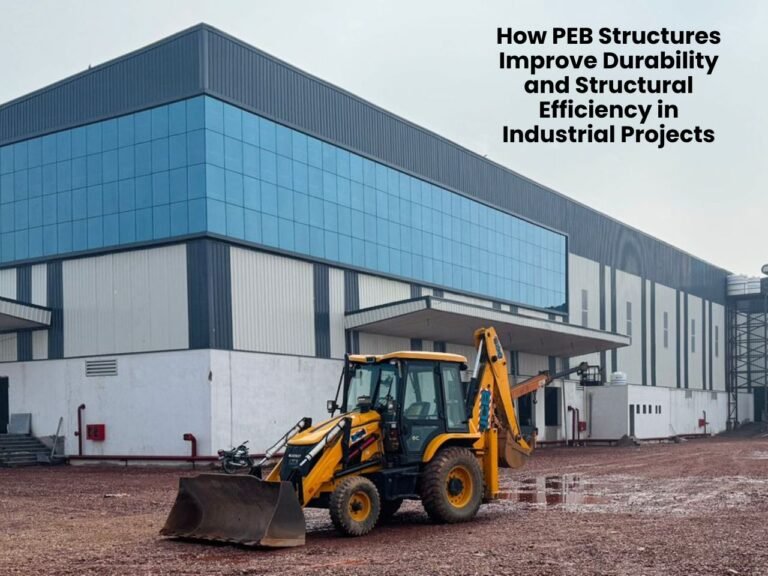
How PEB Structures Improve Durability and Structural Efficiency in Industrial Projects
Introduction
What if you could build a warehouse or factory that lasts longer, performs better, and costs less to maintain—all without compromising on strength?
That’s exactly why industries across the world—from the United States to India, the Middle East, and Europe—are rapidly shifting toward PEB (Pre-Engineered Building) structures.
In today’s competitive industrial environment, durability and structural efficiency are not optional—they are essential. Whether you’re constructing a logistics hub, manufacturing unit, or storage facility, the strength and performance of your building directly impact safety, productivity, and long-term costs.
This article explores how PEB structures improve durability and structural efficiency in industrial projects, breaking down the concept in a simple, engaging, and practical way.
What Are PEB Structures and Why Do They Matter?
PEB (Pre-Engineered Building) structures are steel buildings designed and manufactured in a factory and then assembled on-site. Every component—from beams to columns—is engineered with precision using advanced software.
Why They Matter:
- Faster construction
- Better quality control
- Stronger and more durable structures
- Optimized material usage
Unlike traditional construction, which relies heavily on on-site work, PEB structures bring engineering accuracy and efficiency into every stage.
The Core of Durability in PEB Structures
Durability in construction refers to how well a structure withstands time, weather, and operational stress. PEB structures are specifically engineered to enhance durability in multiple ways.
Key Durability Factors:
- High-grade structural steel
- Corrosion-resistant coatings
- Precision design for load distribution
- Reduced wear and tear
These elements ensure that PEB buildings remain strong and reliable for decades.
High-Quality Steel: The Backbone of Strength

Steel is the primary material used in PEB structures—and not just any steel.
What Makes It Durable:
- High tensile strength
- Uniform quality from factory production
- Resistance to cracking and warping
Real Impact:
A PEB warehouse in a high-load environment (like logistics or heavy manufacturing) can handle continuous operations without structural fatigue.
Precision Engineering Reduces Structural Weakness
One of the biggest advantages of PEB structures is precision engineering.
How It Works:
- Designs are created using advanced software
- Load calculations are accurate
- Components fit perfectly during assembly
Why It Matters:
In traditional construction, small errors can lead to structural weaknesses. PEB eliminates these risks, resulting in:
- Better load distribution
- Fewer stress points
- Higher overall stability
Resistance to Harsh Weather Conditions

Industrial buildings must withstand extreme weather—whether it’s heavy snow in the USA, intense heat in the Middle East, or monsoon rains in India.
PEB Advantages:
- Designed for wind loads and seismic conditions
- Roof systems built for drainage and insulation
- مقاومة (resistance) to rust and corrosion
Result:
PEB structures maintain their integrity even in challenging climates, making them ideal for global applications.
Optimized Load Distribution for Structural Efficiency
Structural efficiency means using materials and design in the smartest possible way.
In PEB Structures:
- Loads are distributed evenly across the structure
- Steel sections are tapered for optimal strength
- No unnecessary weight or material
Benefits:
- Reduced stress on foundations
- Better performance under heavy loads
- Longer lifespan
This efficiency is one of the reasons why PEB structures outperform traditional buildings.
Lightweight Design with Strong Performance
PEB structures are lighter than conventional concrete buildings—but that doesn’t mean they are weaker.
Advantages:
- Reduced foundation load
- Faster construction
- Lower material costs
Structural Impact:
Despite being lightweight, these structures offer high load-bearing capacity, making them ideal for industrial use.
Corrosion Protection Extends Lifespan
One of the biggest threats to durability is corrosion. PEB structures address this effectively.
Protective Measures:
- Galvanization
- Anti-corrosion coatings
- High-quality paint systems
Outcome:
- Longer life cycle
- Reduced maintenance
- Better performance in humid or coastal areas
Minimal Maintenance, Maximum Efficiency
Maintenance costs can significantly impact long-term project budgets.
Why PEB Wins:
- Fewer cracks and structural issues
- Durable materials reduce repair needs
- Easy inspection and maintenance
Business Impact:
Lower maintenance means:
- Reduced downtime
- Higher operational efficiency
- Better return on investment
Energy Efficiency and Sustainable Design
Modern industrial projects demand sustainability along with durability.
PEB Sustainability Features:
- Insulated panels reduce heat transfer
- Skylights for natural lighting
- Ventilation systems for airflow
Result:
- Lower energy consumption
- Improved working conditions
- Reduced environmental impact
Scalability Without Compromising Strength

Industrial growth often requires expansion. PEB structures are designed for scalability.
Key Features:
- Modular design
- Easy addition of new sections
- No major structural changes required
Advantage:
You can expand your facility without compromising structural integrity or durability.
Comparison: PEB vs Traditional Construction
| Feature | PEB Structures | Traditional Construction |
|---|---|---|
| Durability | High | Moderate |
| Construction Time | Fast | Slow |
| Structural Efficiency | Optimized | Often inefficient |
| Maintenance | Low | High |
| Cost | Controlled | Variable |
| Scalability | Easy | Difficult |
This comparison clearly shows why industries prefer PEB structures.
Real-World Applications of PEB Structures
PEB structures are widely used across industries worldwide.
Common Applications:
- Warehouses
- Manufacturing plants
- Logistics hubs
- Cold storage units
- Aircraft hangars
Example:
A logistics company in the USA reduced construction time by nearly 40% and maintenance costs by 30% by switching to PEB structures.
Different Perspectives on PEB Structures
While PEB structures are highly efficient, different industries view them in unique ways.
Industrial Sector:
Focus on strength, durability, and cost efficiency
Commercial Sector:
Emphasis on aesthetics and flexibility
Environmental Perspective:
Preference for sustainable and recyclable materials
This versatility makes PEB structures suitable for diverse applications.
Practical Tips for Maximizing Durability in PEB Projects
To get the best results from PEB structures:
Best Practices:
- Choose high-quality steel materials
- Work with experienced manufacturers
- Ensure proper coating and protection
- Follow maintenance schedules
Pro Tip:
Always design your PEB structure based on local climate conditions for maximum durability.
How PEB Structures Improve Durability and Structural Efficiency in Industrial Projects – Frequently Asked Questions
1. What makes PEB structures more durable than traditional buildings?
PEB structures use high-grade steel, precision engineering, and corrosion protection, making them more resistant to environmental stress. Refer to the section on High-Quality Steel for more details.
2. Are PEB buildings suitable for extreme weather conditions?
Yes, they are designed to withstand wind, snow, and seismic loads. See Resistance to Harsh Weather Conditions for a detailed explanation.
3. How do PEB structures improve structural efficiency?
They optimize load distribution and material usage, reducing unnecessary weight while maintaining strength. Learn more in Optimized Load Distribution.
4. Do PEB structures require maintenance?
Yes, but significantly less than traditional buildings. Check Minimal Maintenance, Maximum Efficiency for insights.
5. Can PEB structures be expanded later?
Absolutely. Their modular design allows easy expansion without compromising strength. See Scalability Without Compromising Strength.
6. Are PEB structures environmentally friendly?
Yes, they use recyclable materials and energy-efficient designs. Refer to Energy Efficiency and Sustainable Design.
7. How long do PEB structures last?
With proper maintenance, they can last several decades due to durable materials and protective coatings.
Conclusion
PEB structures are redefining industrial construction by combining durability, efficiency, and cost-effectiveness in one powerful solution.
From high-strength steel and precision engineering to weather resistance and scalability, every aspect of PEB design is optimized for long-term performance. These structures not only reduce construction time and cost but also ensure reliability and sustainability for years to come.
As industries continue to evolve, choosing PEB structures is no longer just an option—it’s a strategic decision for building smarter, stronger, and more efficient infrastructure.
If you’re planning your next industrial project, exploring PEB solutions could be the key to achieving both durability and structural excellence.