


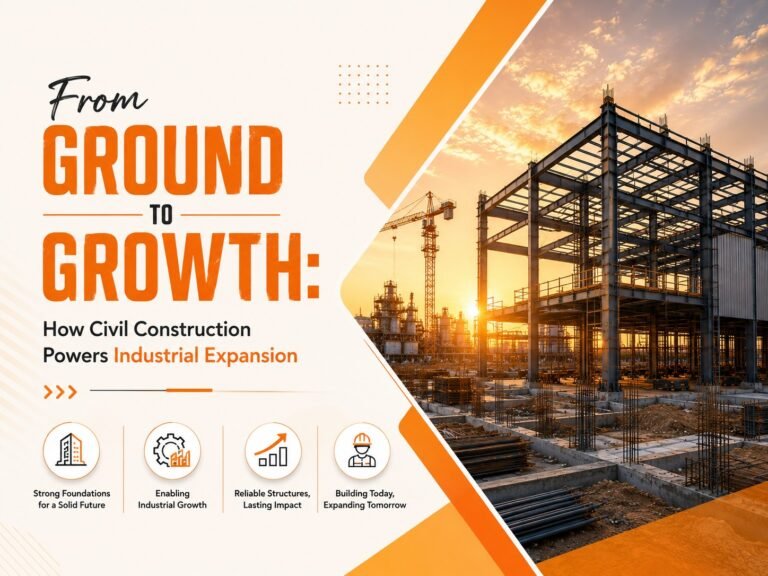
From Ground to Growth: How Civil Construction Powers Industrial Expansion
Industrial growth does not begin with machines or factories. It begins with the ground beneath them.
Every warehouse, manufacturing plant, logistics hub, and industrial corridor starts with one essential step — civil construction. Roads are laid, foundations are built, drainage systems are planned, and steel structures rise from carefully prepared land. Without strong civil construction, industrial expansion simply cannot happen.
Across India and around the world, industries are growing faster than ever. New factories are opening, warehouses are expanding, and infrastructure projects are reshaping cities and industrial zones. Behind every successful industrial project is a team of engineers, planners, contractors, and construction experts working together to turn empty land into productive spaces.
Today, businesses demand faster construction, durable structures, lower operational costs, and scalable infrastructure. This is where modern civil construction and PEB (Pre-Engineered Building) solutions are changing the future of industrial development.
In this article, we will explore how civil construction powers industrial expansion, why it matters for economic growth, and how modern construction methods are helping industries build smarter and faster.
What Is Civil Construction?
Civil construction is the process of designing, developing, and building infrastructure projects that support industrial, commercial, and public activities. It includes everything from site preparation and structural foundations to roads, drainage systems, industrial sheds, and utility infrastructure.
Civil construction plays a major role in projects such as:
- Industrial factories
- Warehouses
- Logistics parks
- Manufacturing units
- Commercial buildings
- Steel structures
- Infrastructure developments
- Industrial corridors
The main goal of civil construction is to create safe, durable, and functional structures that can support long-term operations.
In industrial development, civil construction is not limited to building walls and floors. It involves planning, engineering, resource management, safety standards, and efficient execution.
Why Civil Construction Is Essential for Industrial Expansion
Industrial growth depends heavily on infrastructure. A factory cannot operate without roads, utilities, drainage systems, loading areas, and structural support.
Civil construction provides the foundation for industrial progress in several ways:
Supports Manufacturing Growth
Factories need durable construction that can handle heavy machinery, storage loads, and large-scale operations. Civil construction ensures the structure is strong enough for industrial use.
Improves Logistics and Transportation
Industrial areas require proper road connectivity, parking areas, loading docks, and transportation systems. Well-planned civil construction improves the movement of goods and materials.
Creates Employment Opportunities
Large construction projects create jobs for engineers, architects, welders, technicians, laborers, and project managers.
Encourages Regional Development
When industries grow, nearby towns and cities also develop. Better infrastructure attracts businesses, housing projects, schools, and commercial activities.
Boosts Economic Growth
Industrial infrastructure directly contributes to economic progress by supporting production, exports, trade, and investments.
The Connection Between Civil Construction and Industrial Infrastructure
Industrial infrastructure is more than just buildings. It includes all the physical systems needed for industrial operations.
Civil construction helps develop:
- Roads and highways
- Industrial parks
- Water supply systems
- Drainage systems
- Electrical infrastructure
- Factory sheds
- Warehouses
- Steel structures
- Utility networks
In India, industrial expansion is increasing rapidly due to sectors such as manufacturing, e-commerce, renewable energy, logistics, and automotive production.
Government initiatives like Make in India, smart city development, and industrial corridor projects are also increasing the demand for civil construction services.
How PEB Structures Are Transforming Industrial Construction
One of the biggest changes in modern industrial construction is the rise of PEB structures.
PEB stands for Pre-Engineered Buildings. These are steel structures designed and manufactured in factories before being assembled on-site.
PEB solutions are becoming highly popular because they offer:
- Faster construction
- Lower costs
- Better durability
- Flexible designs
- Reduced maintenance
- Energy efficiency
Traditional construction methods often take months or years to complete. PEB construction reduces project timelines significantly.
Industries prefer PEB sheds for:
- Warehouses
- Manufacturing units
- Distribution centers
- Storage facilities
- Industrial plants
- Commercial buildings
The combination of civil construction and PEB technology allows industries to expand quickly without compromising quality.
Key Stages of Industrial Civil Construction
Every industrial project follows a series of planned stages. Each stage is important for ensuring safety, efficiency, and long-term performance.
Site Analysis and Planning
Before construction begins, engineers study the land conditions, soil strength, drainage patterns, and environmental factors.
This helps determine:
- Foundation requirements
- Structural load capacity
- Construction feasibility
- Safety considerations
Design and Engineering
Architects and engineers create layouts and structural designs based on operational needs.
This stage includes:
- Structural planning
- Utility design
- Safety systems
- Space optimization
- Workflow planning
Foundation Construction
Strong foundations are critical in industrial projects because factories and warehouses often support heavy machinery and equipment.
Steel Structure Fabrication
Steel components are manufactured according to project specifications.
This process improves:
- Accuracy
- Construction speed
- Structural quality
Installation and Assembly
Once fabrication is complete, the structures are assembled on-site using cranes, lifting systems, and skilled teams.
Finishing and Inspection
The final stage includes inspections, safety checks, flooring, electrical systems, and utility integration.
Benefits of Modern Civil Construction for Industries
Modern civil construction methods offer several advantages for industrial businesses.
Faster Project Completion
Time is extremely important in industrial development. Delays can increase costs and reduce business opportunities.
Modern construction techniques reduce construction time through:
- Advanced planning
- PEB technology
- Automated fabrication
- Efficient project management
Improved Durability
Industrial buildings must withstand:
- Heavy equipment
- Harsh weather
- Operational stress
- Long working hours
High-quality steel and engineered construction improve durability and structural performance.
Cost Efficiency
Efficient construction reduces:
- Material waste
- Labor costs
- Maintenance expenses
- Operational downtime
Flexible Expansion
PEB structures allow industries to expand facilities easily in the future.
This flexibility is useful for:
- Growing businesses
- Production increases
- Storage expansion
- New operational units
Better Sustainability
Modern civil construction supports sustainability through:
- Energy-efficient materials
- Reduced waste
- Eco-friendly construction methods
- Solar-ready structures
The Role of Civil Construction in Warehouse Development
The growth of e-commerce and logistics industries has increased demand for warehouses across India.
Warehouses require:
- Large storage spaces
- Efficient layouts
- Strong flooring systems
- Loading areas
- Proper ventilation
Civil construction plays a key role in creating warehouses that improve operational efficiency.
Modern warehouse construction focuses on:
- Fast execution
- Smart storage systems
- Fire safety
- Efficient logistics flow
- Durable steel structures
PEB warehouse solutions are especially popular because they reduce construction time and operational costs.
Industrial Sheds and Factory Construction in India
India is becoming one of the fastest-growing industrial economies in the world. As industries expand, the demand for factory sheds and industrial buildings is increasing rapidly.
Industrial shed construction supports sectors such as:
- Manufacturing
- Automotive
- Textile
- Food processing
- Pharmaceuticals
- Renewable energy
Modern industrial sheds are designed for:
- High productivity
- Efficient workflow
- Maximum storage
- Future expansion
Civil construction companies today focus on combining engineering expertise with advanced materials to create strong industrial infrastructure.
Challenges in Industrial Civil Construction
While industrial construction offers major opportunities, it also comes with several challenges.
Project Delays
Delays may occur due to:
- Weather conditions
- Material shortages
- Labor issues
- Approval processes
Efficient project management helps reduce delays.
Rising Material Costs
Steel, cement, and fuel prices can affect project budgets significantly.
Safety Requirements
Industrial construction projects involve heavy equipment and large structures, making safety a top priority.
Environmental Concerns
Construction companies must follow environmental regulations related to:
- Waste management
- Pollution control
- Water conservation
Skilled Workforce Shortage
Modern industrial construction requires experienced engineers, fabricators, and technicians.
Technology Is Changing the Future of Civil Construction
Technology is making civil construction faster, smarter, and more efficient.
Some major innovations include:
Building Information Modeling (BIM)
BIM allows engineers to create digital models before construction begins.
This improves:
- Planning accuracy
- Cost estimation
- Project coordination
Automated Fabrication
Modern steel fabrication uses automation for better precision and faster production.
Drones and Site Monitoring
Drones help monitor large industrial projects and improve safety inspections.
Smart Construction Materials
Advanced materials improve:
- Energy efficiency
- Structural strength
- Corrosion resistance
Sustainable Construction Practices
Green construction methods are helping industries reduce environmental impact.
How Civil Construction Supports India’s Economic Growth
Civil construction is one of the strongest drivers of economic development in India.
Industrial infrastructure creates:
- Employment
- Investment opportunities
- Export growth
- Manufacturing expansion
- Urban development
Large-scale infrastructure projects also improve transportation, logistics, and industrial connectivity.
As India continues to grow as a manufacturing and logistics hub, civil construction will remain essential for future industrial expansion.
Choosing the Right Civil Construction Partner
Selecting the right construction company is critical for project success.
Businesses should look for:
- Industry experience
- Engineering expertise
- Quality standards
- Safety compliance
- Project management capability
- On-time delivery
A reliable construction partner helps reduce risks, improve efficiency, and ensure long-term durability.
Experienced PEB and civil construction companies can also provide:
- Custom designs
- Turnkey solutions
- Cost optimization
- Faster execution
The Future of Industrial Construction
The future of industrial construction will focus on:
- Smart infrastructure
- Sustainable buildings
- Faster project execution
- Digital engineering
- Energy-efficient designs
PEB solutions and advanced civil construction methods will continue to shape industrial development worldwide.
Industries are no longer looking only for buildings. They want infrastructure that supports productivity, scalability, and long-term business growth.
This shift is creating new opportunities for innovation in civil construction and industrial engineering.
Conclusion
From roads and foundations to factories and warehouses, civil construction powers industrial growth at every level. It transforms empty land into productive infrastructure that supports businesses, industries, and economic progress.
Modern industrial development depends on smart engineering, durable structures, and efficient execution. With the rise of PEB technology and advanced construction methods, industries can now build faster, reduce costs, and expand more efficiently than ever before.
As India continues to strengthen its industrial capabilities, civil construction will remain at the center of growth and infrastructure development.
Whether it is a manufacturing unit, warehouse, logistics hub, or industrial shed, every successful project begins with a strong foundation — and that foundation is built through expert civil construction.